I’m going to say something that might make the “aesthetic organization” influencers cringe: you do not need a $50 custom acrylic drawer system or a color-coded label maker to figure out how to organize under the sink. I spent my childhood watching my dad tackle broken appliances with nothing but a screwdriver and grit, and if there’s one thing he taught me, it’s that function beats fashion every single time. There is nothing more frustrating than spending a Saturday afternoon trying to make a cabinet look like a minimalist showroom, only to have it become a chaotic mess of half-empty spray bottles the second you actually try to clean a spill.
I’m not here to sell you on a lifestyle of expensive bins that look pretty in photos but fail the reality test. Instead, I’m giving you a blueprint based on actual systems that work when life gets messy. We’re going to talk about maximizing your vertical space, grouping your supplies by how you actually use them, and picking tools that are durable rather than just decorative. My goal is to help you build a setup that is dead simple and stays organized even when you’re in a rush.
Kitchen Cabinet Decluttering Tips for Real Life
First things first: we need to be honest about what’s actually living in there. Most of us have a graveyard of half-empty bottles and sponges that died three months ago. Before you even think about buying fancy bins, you have to do the “purge.” Grab a trash bag and get rid of anything expired, crusty, or—let’s be real—something you’re keeping “just in case” but haven’t touched since 2022. My rule of thumb? If you haven’t used that specific heavy-duty degreaser in a year, it’s just taking up valuable real estate.
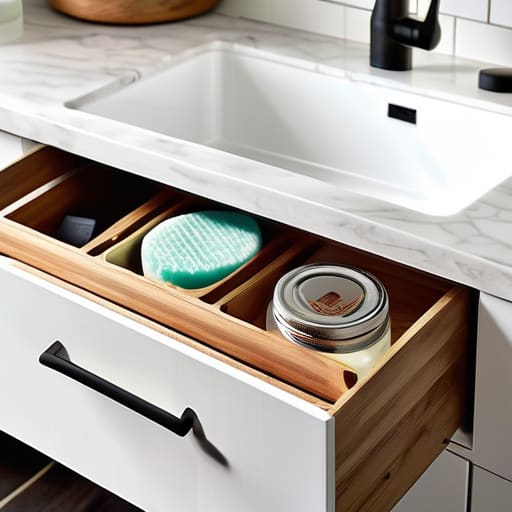
Once the junk is gone, stop trying to force everything into a single, chaotic pile. This is where most people fail because they try to stack things vertically without a plan. I’m a huge fan of using under sink pull out organizers to turn that dark, deep abyss into something actually usable. If you can’t see it, you won’t use it, and you’ll just end up buying a duplicate of the dish soap you already have buried in the back.
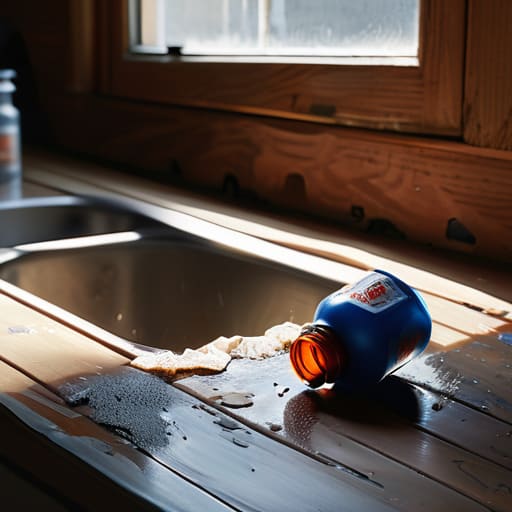
Finally, let’s talk about protection. Since things will eventually leak (it’s a law of physics, honestly), don’t just toss your supplies onto the bare wood. I always recommend laying down some waterproof under sink mats to save your cabinetry from inevitable spills. It’s a small, low-effort move that prevents a minor leak from turning into a massive, expensive headache later on.
Maximizing Small Cabinet Space Without the Fluff
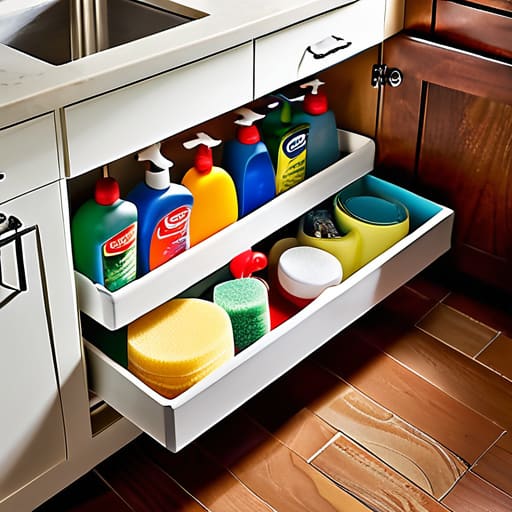
Look, if you’re working with a tiny footprint, you can’t afford to let air be your primary storage method. Most people waste half their cabinet space just by shoving bottles in the back where they can’t be seen. To actually tackle maximizing small cabinet space, you need to think vertically. I’m a huge fan of stackable bins or even small tension rods placed across the width of the cabinet. You can hang your spray bottles by their triggers, which instantly frees up the floor of the cabinet for heavier items like bulk dish soap or sponges. It sounds a bit chaotic at first, but it’s way more efficient than playing Tetris every time you need a sponge.
If you have the budget, investing in under sink pull out organizers is a total game-changer for your sanity. There is nothing more frustrating than digging through a dark abyss of cleaning supplies only to realize the thing you need is buried under three bottles of heavy-duty degreaser. Pull-out drawers or sliding tiers turn that “black hole” into a functional system. Also, do yourself a favor and grab some waterproof under sink mats. They aren’t just for show; they catch the inevitable slow leaks before they ruin your cabinetry, making your long-term maintenance a lot less stressful.
My Go-To Tactics for a Sink That Actually Works
- Stop the “Black Hole” effect by using clear, stackable bins. If you can’t see the half-empty bottle of dish soap hiding in the back, you’re just going to buy another one, and that’s how you end up with a cabinet full of clutter and wasted money.
- Get a tension rod to hang your spray bottles. It sounds like a weird hack, but if you clip those bottles by their triggers to a rod, you instantly free up the entire floor of the cabinet for the heavier stuff like bulk detergent or sponges.
- Use a lazy Susan for the small, annoying stuff. Things like scrubbers, drain cleaners, or those random little packets always get lost in the corners; a rotating turntable brings everything to you so you aren’t playing Tetris every time you need a sponge.
- Invest in a heavy-duty pull-out drawer for the deep stuff. I hate digging through a dark cabinet like I’m looking for buried treasure, so having a sliding tray means you can pull the whole contents toward you and actually see what’s in the back row.
- Group your items by “mission.” Keep all your cleaning supplies in one bin and your dish-related tools in another. It makes zero sense to have a sponge sitting next to a bottle of wood polish; keep the systems simple so you can grab what you need and get back to your life.
The Bottom Line (Literally)
Look, at the end of the day, you don’t need a custom-built, $200 acrylic drawer system to make this work. We’ve covered the essentials: toss the expired cleaners, group your stuff into bins so it doesn’t become a landslide of plastic bottles, and use those vertical spaces before they go to waste. It’s about creating a system that survives your actual life—one where you can grab the dish soap without a mini-excavation project. If you focus on function over aesthetics, you’ll stop fighting your own kitchen and start actually using it. Just remember, the goal isn’t to have a perfectly curated cabinet; it’s to have a space that actually works for you.
I know that staring at a messy, damp, dark cabinet under the sink can feel like a tiny, overwhelming mountain, but I promise it’s worth the effort. When you fix these small, functional gaps in your home, you’re doing more than just tidying up; you’re reclaiming your time and reducing that daily micro-stress. Don’t feel like you have to do it all in one afternoon. Grab a few bins, clear out the junk, and build it piece by piece. You’ve got the tools, you’ve got the plan, and honestly, you’re more capable than you think. Now, go get those bins and make it happen.
Frequently Asked Questions
What should I do if I have a bunch of old, half-empty cleaning bottles taking up all the room?
Honestly? Stop hoarding them. We’ve all been there, holding onto a half-empty bottle of “maybe I’ll use this” lemon spray, but they’re just clutter magnets. First, do a quick audit: if it’s old or gross, toss it. For the stuff you actually use, decant them into a few uniform, reusable spray bottles. It saves a massive amount of space, looks way cleaner, and stops that chaotic “bottle graveyard” from taking over your cabinet.
Are there specific types of bins or organizers that actually hold up against moisture and leaks?
Look, please don’t waste your money on those cheap, flimsy plastic bins you see in every “aesthetic” haul. Under a sink is a high-moisture zone, and if a bottle of dish soap leaks, those thin plastics will crack or get all cloudy and gross. Stick to heavy-duty, BPA-free polypropylene or even clear acrylic with thicker walls. If you’re dealing with serious dampness, metal wire baskets are great for airflow, but honestly? Solid, wipeable plastic is your best bet for easy cleanup.
How do I organize everything if my sink has a bunch of annoying pipes and a garbage disposal in the way?
Look, I get it. Those chunky pipes and the garbage disposal make it feel like you’re trying to organize a construction site rather than a kitchen. Don’t fight the geometry—work around it. Grab some expandable under-sink organizers or even just stackable clear bins that you can slide around the plumbing. If a shelf won’t fit, use tension rods vertically to create “zones” for spray bottles. It’s not about perfect symmetry; it’s about making sure you aren’t wrestling a pipe just to grab the dish soap.
Do I really need to reorganize this every few months, or can I just set it and forget it?
Look, if you build a system that actually works with your habits, you shouldn’t have to touch it every month. The goal isn’t to create a museum piece; it’s to create a workflow. If you find yourself constantly digging through a pile of half-empty sponges, your system failed. Aim for “low-maintenance utility.” Set it up so that putting things back takes less effort than leaving them on the counter, and you’ll forget it even exists.