I’m so tired of seeing those “aesthetic” productivity videos where people spend three hours color-coding a digital planner just to feel like they’ve accomplished something. Honestly, if your planning system requires a degree in graphic design and a $50 subscription to stay organized, it’s not a tool—it’s a chore. I spent years thinking I needed the perfect Notion template or a high-end paper journal to finally figure out how to plan your day effectively, but all I really did was create more digital clutter. Real life doesn’t happen in a perfectly curated grid; it happens in the messy gaps between client calls, troubleshooting broken code, and trying to remember to eat something other than toast.
I’m not here to sell you on a lifestyle makeover or a complicated ritual that takes more time than the work itself. Instead, I’m going to show you how to build a functional system that actually survives contact with reality. We’re going to strip away the fluff and focus on high-impact, low-maintenance methods that prioritize actual output over looking busy. By the end of this, you’ll have a way to manage your time that works for your real, chaotic life, not some idealized version of it.
Ditch the Pretty Apps for Daily Planner Methods That Work
Look, I’ve spent way too many hours scrolling through “study-gram” accounts where every planner looks like a piece of fine art. They’ve got the pastel highlighters, the perfect calligraphy, and enough stickers to cover a laptop—but the second life actually happens, those systems fall apart. If your method requires forty minutes of decorating just to decide when to answer emails, you aren’t being productive; you’re just procrastinating with stationery. I’m all about functionality over fluff. We need daily planner methods that survive a bad mood or a sudden tech outage, not something that only works when your desk is perfectly curated.
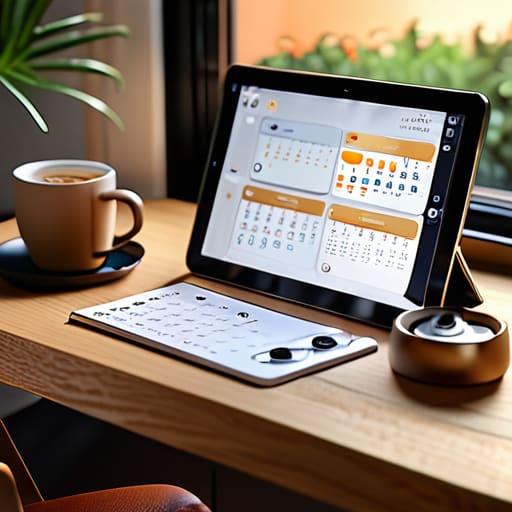
Instead of hunting for the most aesthetic interface, focus on prioritizing tasks effectively using tools that don’t fight you. I’m a huge advocate for simple time blocking techniques—basically, carving out chunks of time for specific types of work so you aren’t constantly context-switching. If you try to manage your entire existence through a complex, multi-layered app, you’ll eventually just end up ignoring the notifications altogether. Start with a basic digital calendar or even a beat-up notebook. The goal isn’t to have a beautiful spread; it’s to have a clear roadmap that tells you exactly what needs your attention right now.
Prioritizing Tasks Effectively Without the Mental Overload

Look, the biggest mistake I see people make isn’t that they don’t have enough to do—it’s that they treat every single item on their to-do list like it’s a high-priority emergency. When everything is “urgent,” nothing is. I used to spend my entire morning paralyzed by a list of twenty tasks, feeling like a failure before I even finished my first coffee. To stop the spiral, you have to start prioritizing tasks effectively by separating the “must-dos” from the “nice-to-dos.” I personally use a modified version of the Eisenhower Matrix: if it doesn’t actually move the needle on my big goals or keep my systems running, it gets pushed to a secondary list.
Once you’ve identified your heavy hitters, you need a way to protect them from the chaos. This is where time blocking techniques actually become your best friend. Instead of just hoping you’ll find time to finish that project, carve out a specific chunk of your afternoon and treat it like a non-negotiable appointment. It’s not about being a robot; it’s about creating boundaries for your focus. When you stop reacting to every notification and start proactively assigning your energy, the mental noise finally starts to quiet down.
Five Ways to Stop Overcomplicating Your Schedule
- Stop overstuffing your calendar. If you think you can actually finish twelve high-level tasks in eight hours, you’re lying to yourself. Pick three “non-negotiables” and let everything else be a bonus.
- Build in “buffer zones” for when life inevitably happens. I don’t care if it’s a sudden server crash or just a spilled coffee—if your schedule is back-to-back, one tiny hiccup will wreck your entire sense of control.
- Use “Time Blocking” for deep work, not just meetings. If you don’t carve out specific chunks of time for your actual projects, you’ll spend your whole day reacting to notifications instead of actually getting things done.
- Do a “Brain Dump” every evening. Before you shut down your laptop, write down every single lingering task swirling in your head. Getting it out of your brain and onto a physical list means you can actually sleep without your mind running a marathon.
- Audit your energy, not just your clock. If you’re a morning person, do your heavy lifting then. Don’t try to tackle complex system configurations at 4 PM when your brain is basically running on low-battery mode.
Stop Planning for Perfection and Start Living
Look, we’ve covered a lot of ground, and if you’re feeling a little overwhelmed, that’s actually a good sign. It means you’re realizing that productivity isn’t about finding the perfect, most expensive digital tool or color-coding your life until your eyes bleed. It’s about ditching the fluff and choosing methods—whether it’s a simple paper list or a stripped-back digital task manager—that actually fit into your real-world chaos. We talked about moving away from aesthetic-only apps and finding ways to prioritize your tasks so you aren’t constantly drowning in mental clutter. The goal isn’t to finish every single thing on your list; it’s to ensure that the things you do finish are the ones that actually move the needle for you.
At the end of the day, your schedule should be a tool that serves you, not a master that dictates your worth. If your plan falls apart because a server went down or you just plain needed a nap, don’t scrap the whole system. Just recalibrate and go again. Life is messy, tech is unpredictable, and humans aren’t programmed to run on perfect loops. Build a system that is resilient enough to bend without breaking, and remember that a functional life is always better than a perfectly curated one. You’ve got this.
Frequently Asked Questions
What do I do when my entire planned schedule falls apart by 10:00 AM?
First, take a breath and step away from the screen. When the schedule breaks, your instinct is to scramble to “catch up,” but that’s how you burn out by noon. Instead, do a hard reset. Grab a scrap of paper and write down the three—and only three—things that actually must happen today to prevent a catastrophe. Ignore the rest. We’re pivoting from a rigid plan to a triage system. Function over perfection, always.
How can I plan my day without feeling like I'm turning myself into a robot?
Look, if your schedule feels like a rigid script, you’re going to burn out by Tuesday. Stop trying to account for every single minute. Instead, try “time buffering.” Leave gaps between tasks for the inevitable chaos—like a sudden software update or just needing ten minutes to stare at a wall. Plan for your energy levels, not just your clock. If you’re feeling fried, swap a heavy task for something low-stakes. Build a framework, not a cage.
Is it better to plan everything the night before or just wing it in the morning?
Honestly? Winging it in the morning is a recipe for decision fatigue before you’ve even had coffee. If you spend your first hour staring at a blank list trying to figure out where to start, you’ve already lost. I’m a big believer in the “night-before” approach—not to be rigid, but to clear the mental cache. Map out your top three non-negotiables before bed so you can hit the ground running without the brain fog.
How do I stop my "to-do list" from becoming a massive, overwhelming pile of things I'll never actually finish?
The problem is you’re treating your to-do list like a wish list instead of a blueprint. Stop dumping every random thought into one giant pile. It’s a recipe for burnout. Try the “Rule of Three”: pick three non-negotiable tasks for the day. Everything else goes into a separate “backlog” file. If it’s not in the top three, it doesn’t exist until tomorrow. Keep the list small enough to actually conquer.